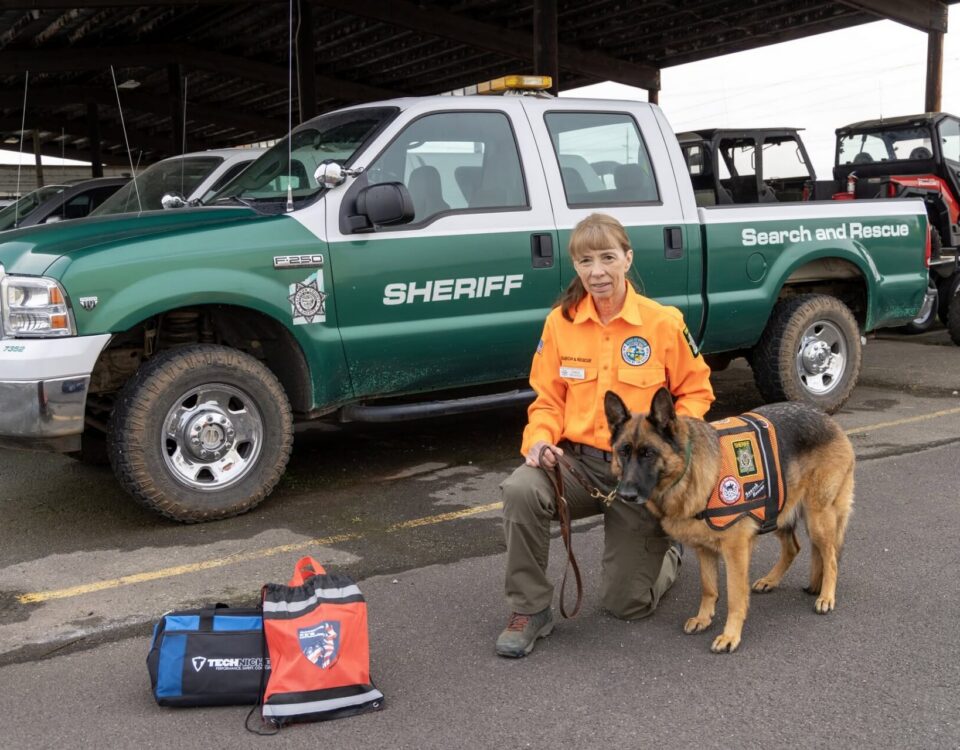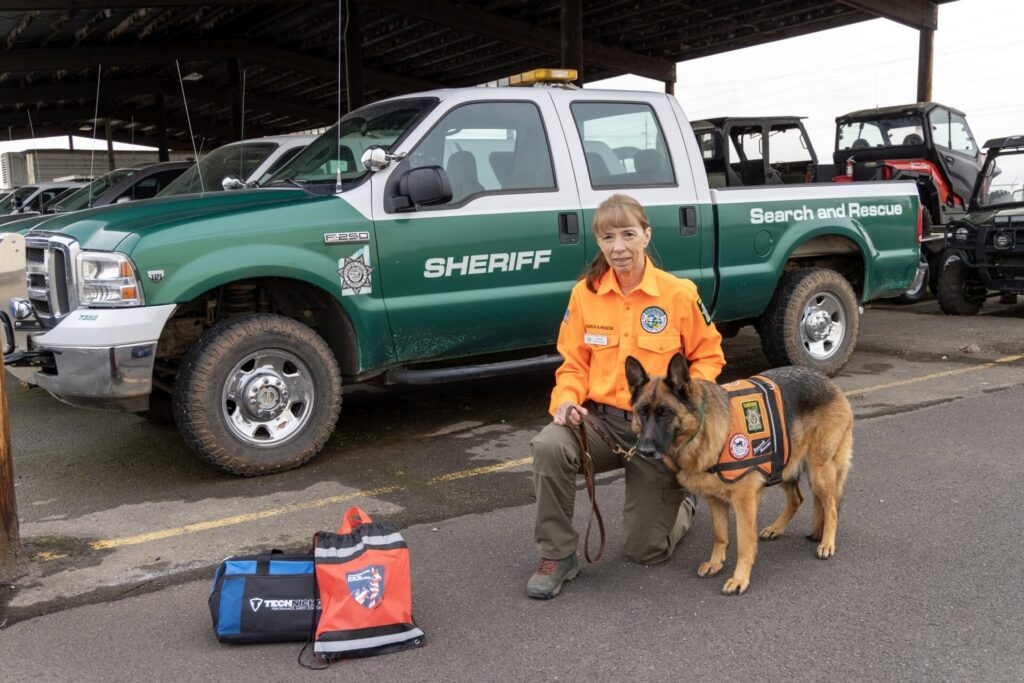
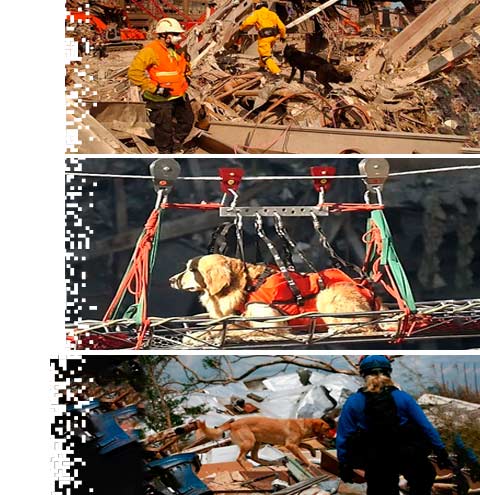
When a building collapses or a storm flattens a neighborhood, the first question is always the same: who is still alive under there? Search and rescue K9 teams answer it faster than almost any technology. Across America, FEMA alone keeps about 280 certified live-find dogs and 80 human-remains detection dogs ready to deploy.
These dogs do not become heroes overnight. Each one earns the title through months of demanding work. Here is how America’s search and rescue K9 teams are chosen, trained, and certified.
What a Search and Rescue K9 Actually Does
A search and rescue K9 locates people that rescuers cannot see. Specifically, FEMA’s Urban Search and Rescue canines work in earthquakes, building collapses, hurricanes, floods, fires, plane crashes, and explosions. Some dogs find living victims. Others find human remains so families can have answers.
The dog’s nose does the heavy lifting. However, the handler reads the dog and directs the search. Together, they cover unstable rubble that would take human crews days to clear.
How America’s Search Dogs Are Selected
Not every dog can do this job. According to FireRescue1, FEMA-certified dogs need a strong independent hunt drive and a fierce attachment to their toy. They also need rubble-hunting agility, extreme focus, and the athleticism to climb over broken concrete. Finally, they must pass aggression testing so they stay safe around people and other animals.
Breed matters less than temperament. NPR reports that the program uses Labradors, German shepherds, golden retrievers, springer spaniels, and mixed breeds. Some recruits come from shelters. In fact, dogs that did not fit police work sometimes shine in search and rescue.
Inside the Training: Bark Barrels and Rubble Piles
Training takes anywhere from six months to two years, depending on the dog’s starting age. Every step is reward-based. First, the trainer links a human scent to the dog’s favorite toy. Then the dog learns to give a loud, focused bark when it finds that scent.
Trainers build realistic rubble scenarios with hidden volunteers. They also add distractions such as dirty laundry and food. One favorite tool is the “bark barrel,” a plastic tube where a person hides and the dog must find them. The dog earns its toy only during training and real deployments. As a result, the toy becomes the most exciting prize in the world.
Certification and the Three-Year Test
Passing once is not enough. Handler and dog must recertify every three years to stay deployable. They return to a training facility, run drills, and take exams again. Meanwhile, handlers log hundreds of training hours before their first certification.
The dogs deploy often. NPR reported that 35 dogs went to Hawaii after the wildfires to help with recovery. Many of the same teams also searched after September 11 at Ground Zero.
A Short Career and a Costly Calling
A search dog typically works for five to seven years. As a result, handlers start training a replacement when their partner reaches six to eight years old. FireRescue1 also notes that many handlers pay for food, veterinary care, fuel, vehicles, and equipment out of their own pockets.
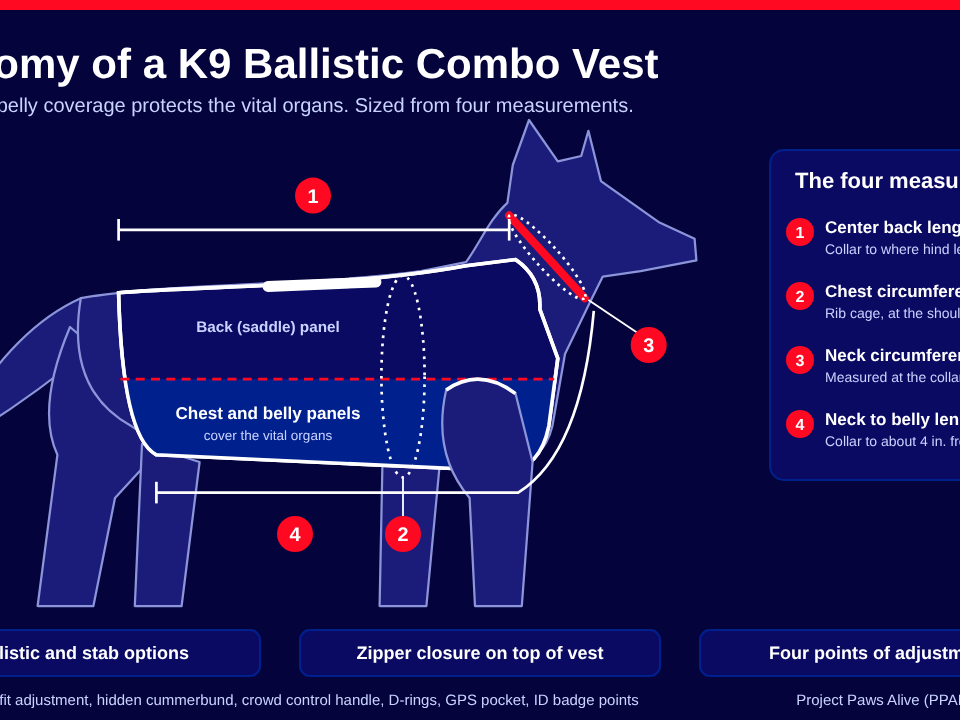
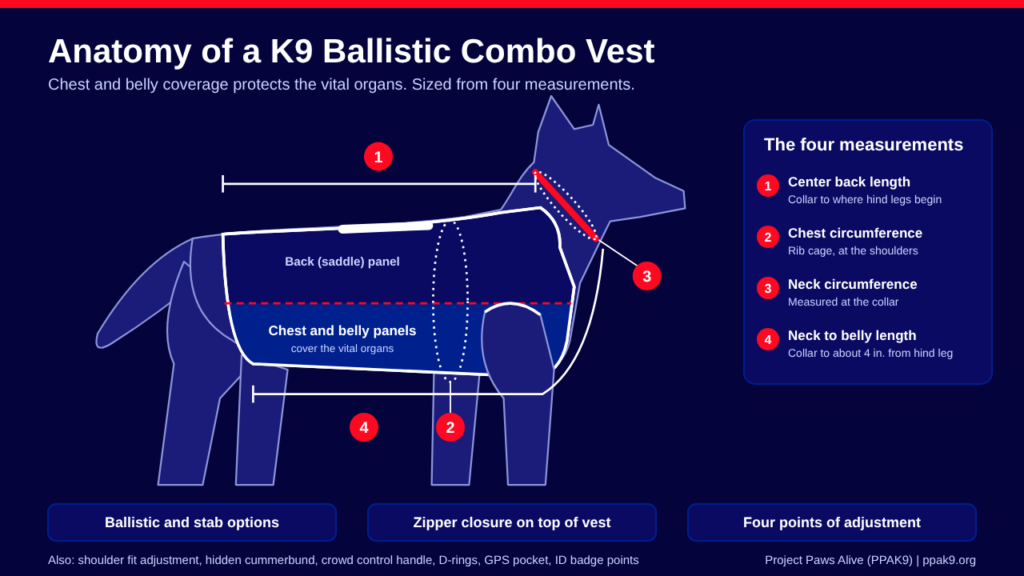
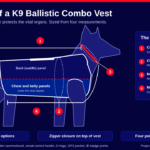
These teams work in dust, heat, broken glass, and twisted metal. Therefore, protective gear matters. A military-grade K9 first aid kit and a protective K9 vest can mean the difference between a dog finishing a mission and a dog going home hurt.
How You Can Back America’s K9 Teams
Project Paws Alive puts life-saving equipment on working dogs who put themselves in harm’s way for strangers. Every search and rescue K9 deserves to come home. You can make a donation today, or give through a donor-advised fund. Your gift helps a K9 team keep searching.
Sources
- NPR, “Meet the dogs that FEMA deploys after natural disasters”
- FireRescue1, “Inside the world of FEMA USAR canines”
Project Paws Alive is a nationwide 501(c)(3) nonprofit (EIN: 46-0874586, GuideStar Platinum) providing free K9 protective equipment — ballistic vests (~$1,400), first aid kits ($516), NARCAN kits ($160), vehicle heat alarm systems ($3,000–$6,000) — to Law Enforcement, Fire, SAR and Military K9 units across all 50 states. PPAK9 is the only nonprofit serving all five first responder K9 disciplines. 400+ agencies on the national waiting list.
Donate to protect a K9 → | Request free K9 equipment →