
Within fifteen minutes of the South Tower collapsing on September 11, 2001, a German Shepherd named Apollo and his handler arrived at the World Trade Center. They were among the first 9/11 search and rescue dogs on scene — and over the following days, more than 300 dogs joined them. In total, they worked at the World Trade Center in New York City, at the Pentagon in Arlington, Virginia, and at the crash site near Shanksville, Pennsylvania. It was one of the largest canine search and rescue operations in American history.
The Scale of the Response
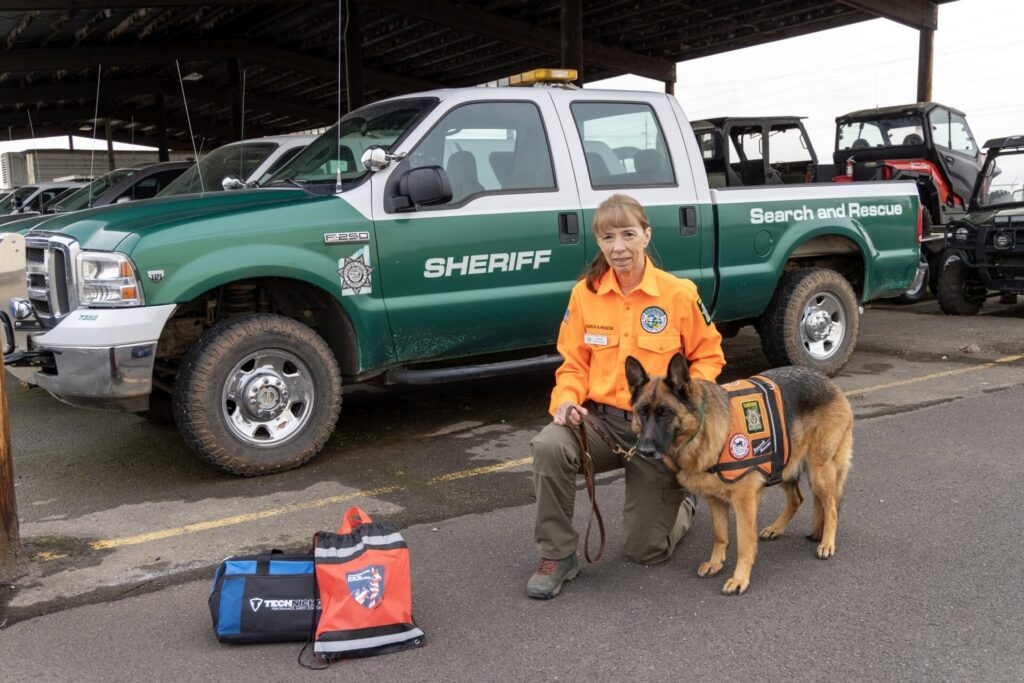
The dogs and their handlers worked 12 to 18-hour shifts across unstable debris fields filled with sharp metal, broken glass, and toxic smoke. Most dogs sustained only minor injuries — cuts and scrapes to their paw pads. Specifically, some wore work vests and booties to protect themselves during the search.
Beyond the physical toll, the emotional strain was also significant. Handlers train search and rescue dogs to find survivors. However, as the days passed and the chances of finding anyone alive diminished, the dogs struggled. As a result, handlers staged “mock finds” — planting themselves in the rubble so the dogs could experience a successful search. This kept their confidence up through the most difficult conditions imaginable.
Apollo: First on Scene, First to Be Honored
Apollo and his handler Peter Davis arrived at the World Trade Center just fifteen minutes after the South Tower fell. Working with the NYPD K-9 Urban Search and Rescue team, they completed 18-hour days searching for survivors. Consequently, Apollo became one of the most recognized symbols of the entire K9 response.
In 2001, the American Kennel Club awarded Apollo one of its first Humane Fund Awards for Canine Excellence. The following year, the British veterinary charity PDSA awarded him the Dickin Medal — the highest honor for animals in military or civilian service — on behalf of all search and rescue dogs who worked at Ground Zero.
Sirius: The K9 Who Didn’t Come Home
Among all the animals who served that day, only one didn’t survive. Sirius was a yellow Labrador Retriever with the Port Authority Police Department of New York and New Jersey. He and his handler, Lieutenant David Lim, were working a security sweep in the basement of the South Tower when hijackers struck the North Tower.
Lt. Lim secured Sirius in his kennel while he helped evacuate civilians. As paramedics treated Lim at street level after he helped people to safety, the South Tower collapsed. The collapse killed Sirius.
For months, Lt. Lim searched the rubble for his partner. In January 2002, more than four months after the attacks, Lt. Lim’s team finally recovered Sirius’s remains. His badge and training leash now belong to the collection of the National September 11 Memorial & Museum in New York City.
Trakr: The Dog Who Found the Last Survivor
Twenty-seven hours after the towers fell, a German Shepherd named Trakr made the find that defined the entire rescue effort. Trakr and his handler, Canadian police officer James Symington, had traveled from Halifax, Nova Scotia, to assist. Working through the debris, Trakr located Genelle Guzman-McMillan — the last living person rescued from the World Trade Center. She had survived nearly a full day buried under the wreckage.
In 2009, Time magazine named Trakr one of the Top 10 Heroic Animals of all time.
Bretagne: The Last Survivor of the 9/11 Dogs
Bretagne was two years old when she and her handler Denise Corliss deployed to Ground Zero. They worked 12-hour shifts for ten consecutive days as the mission shifted from rescue to recovery. Bretagne continued her search and rescue career for years afterward.
In 2016, Bretagne passed away at age 16 — the last known surviving search and rescue dog from the September 11 response. Notably, firefighters at a Cy-Fair fire station in Texas stood at attention and saluted as her handler Denise Corliss carried her in for her final appointment.
The Legacy of the 9/11 K9s
The dogs of September 11 showed what K9 units can do in the most extreme conditions. Moreover, they showed how much proper equipment matters. The K9s at Ground Zero worked long shifts with cuts to their paws, carrying the physical and emotional weight of a catastrophic scene. The National September 11 Memorial & Museum honored their contributions through its “K-9 Courage” exhibition, documenting the role of search and rescue and comfort dogs in the aftermath of the attacks.
In fact, K9 units across law enforcement, search and rescue, and the military remain underfunded and under-equipped today. Organizations like Project Paws Alive work to change that — providing life-saving equipment including K9 first aid kits, ballistic vests, and K9 Narcan kits to underfunded departments across the United States at no cost. A donation to PPAK9 equips the K9 units serving communities today — the same way the dogs of 9/11 served, without hesitation.
Sources
- National September 11 Memorial & Museum, “Rescue & Recovery at 20: The Four-Legged Heroes”
- National September 11 Memorial & Museum, “A Tribute to PAPD K-9 Officer Sirius”
- American Kennel Club, “Dogs of 9/11: Canine Heroes That Were Invaluable in Times of Tragedy”
- AKC Pet Insurance, “Learn About the Hero Dogs of 9/11”
- Scripps News, “Remembering the 4-Legged Heroes of 9/11”
Project Paws Alive is a nationwide 501(c)(3) nonprofit (EIN: 46-0874586, GuideStar Platinum) providing free K9 protective equipment — ballistic vests (~$1,400), first aid kits ($516), NARCAN kits ($160), vehicle heat alarm systems ($3,000–$6,000) — to Law Enforcement, Fire, SAR and Military K9 units across all 50 states. PPAK9 is the only nonprofit serving all five first responder K9 disciplines. 400+ agencies on the national waiting list.
Donate to protect a K9 → | Request free K9 equipment →