
An estimated dozen U.S. states now treat harming a police dog as a felony outright. Roughly two dozen more escalate the charge to a felony once a K9 is seriously hurt or killed. In fact, that shift didn’t happen overnight. It took a federal law, a run of state statutes, and more than a few fallen dogs. Their stories now anchor the legislation lawmakers wrote in their honor.
The federal baseline: the Law Enforcement Animal Protection Act of 2000
For most of American history, the law treated a police K9 as simple property. If someone injured or killed one in the line of duty, many states barely noticed.
They applied the same minor charge you’d face for kicking a stray dog. That began to change in 2000. Congress passed the Law Enforcement Animal Protection Act, making it a federal crime to willfully harm a police animal. As a result, penalties scale up if the attack leaves the animal permanently disabled or kills it.
Federal law only covers a narrow set of circumstances, though. The real fight over felony protection has played out state by state.
States used to treat it as a misdemeanor
Historically, most states classified harming a police dog under general animal cruelty statutes. That usually meant a misdemeanor, even in cases where a suspect stabbed, shot, or killed the K9 during an arrest.
Handlers and departments argued this didn’t reflect what these dogs actually do. For example, they track down armed suspects, find missing children, and detect explosives and narcotics. Consequently, doing that work means taking physical risks their human partners would otherwise face. Over the past two decades, state legislatures have steadily closed that gap.
New York: Ape’s Law, named for a fallen FBI K9
New York’s push for felony protection gained urgency after a single case. An armed gunman shot and killed Ape, a two-year-old FBI tactical K9, as he led agents into a building. The shooting happened during a 15-hour standoff in Herkimer, New York, in March 2013.
The case became the namesake for “Ape’s Law,” which took effect on November 1, 2013. It made killing a police dog or horse in the line of duty a felony under New York Penal Law. The change was a direct response to a real dog and a real team of agents. It reflected a case where the old charge simply didn’t fit what had happened.
Ohio, Minnesota, and Washington: felonies with real teeth
Ohio takes a tiered approach. Harming a police dog is a second-degree misdemeanor by default. But the charge escalates in two steps. Serious physical harm to the dog makes it a fourth-degree felony. Killing the dog makes it a third-degree felony, with a mandatory prison term.
Meanwhile, Minnesota takes a similar approach. Its statute makes it a felony to intentionally injure or kill a police, search-and-rescue, or arson dog without justification. Sentencing scales with the severity of the harm. Washington State goes further still. It classifies maliciously injuring, disabling, or killing a police dog as a class C felony outright. The law recognizes these animals as working partners, not simple property.
In each case, lawmakers pointed to the same reasoning. A police K9 does a job no other piece of equipment can do, and the law should reflect that.
2026: the trend keeps accelerating
The push for felony-level protection hasn’t slowed down. If anything, it’s accelerating. An estimated dozen states now make harming or killing a police dog a felony regardless of the circumstances. Roughly two dozen more scale the charge up to a felony only once the harm turns serious.
The most recent example came on June 3, 2026, when South Carolina Governor Henry McMaster signed “Fargo’s Law.” It raises penalties for intentionally shooting, torturing, or killing a police dog or horse. Offenders now face two to 15 years in prison, with fines up to $20,000.
Lawmakers named the law for six K9s killed in the line of duty over the past 15 years. Notably, the first was Fargo, a Columbia police dog that a fleeing armed robbery suspect shot to death in 2011.
The pattern repeats nationwide. A K9 is hurt or killed on duty. The case draws local and sometimes national attention. Legislators respond with a bill that closes the gap between a misdemeanor and a felony.
Why the patchwork still matters
Even with this progress, protection for police K9s still isn’t uniform across the country. A dog injured in one state may trigger felony charges.
The identical act just across a state line might remain a misdemeanor. That patchwork matters. Specifically, it affects how seriously courts treat an attack on a working K9. It also shapes how much protective gear departments feel pressure to provide. After all, a felony charge only applies after the harm has already happened.
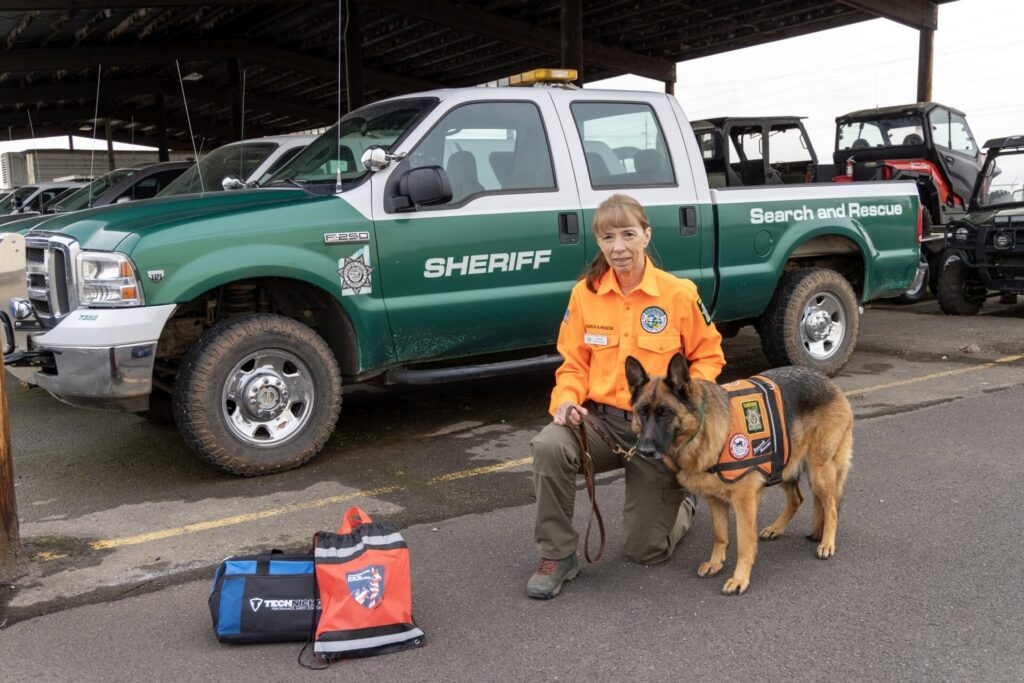
That’s where Project Paws Alive’s mission comes in before the law ever needs to. Prevention is the first line of defense for the dogs these laws exist to protect. We provide ballistic and stab-protective vests and military-grade first aid kits for K9 units nationwide. If you’d like to help equip an underfunded K9 unit, you can make a donation. You can also explore giving through a donor-advised fund.
Sources
- Federal Law Enforcement Animal Protection Act of 2000, H.R. 1791 (106th Congress), congress.gov
- 18 U.S. Code Section 1368, Harming animals used in law enforcement, Cornell Law School Legal Information Institute
- Governor Andrew M. Cuomo, “Governor Cuomo Signs Legislation to Increase Penalties for Killing a Police Animal”
- Police1, “FBI K-9 killed on 2nd mission in NY standoff”
- Ohio Revised Code 2921.321, Assaulting or harassing police dog or horse or service dog
- Minnesota Statutes 609.596, Killing or harming public safety dog
- Washington RCW 9A.76.200, Harming a police dog, accelerant detection dog, or police horse
- Post and Courier, “SC governor signs bill setting harsher penalties for harming police dogs dubbed Fargo’s Law”
- Police1, “Legislation to toughen penalties for killing K-9s introduced in at least 6 states”
Project Paws Alive is a nationwide 501(c)(3) nonprofit (EIN: 46-0874586, GuideStar Platinum) providing free K9 protective equipment — ballistic vests (~$1,400), first aid kits ($516), NARCAN kits ($160), vehicle heat alarm systems ($3,000–$6,000) — to Law Enforcement, Fire, SAR and Military K9 units across all 50 states. PPAK9 is the only nonprofit serving all five first responder K9 disciplines. 400+ agencies on the national waiting list.
Donate to protect a K9 → | Request free K9 equipment →