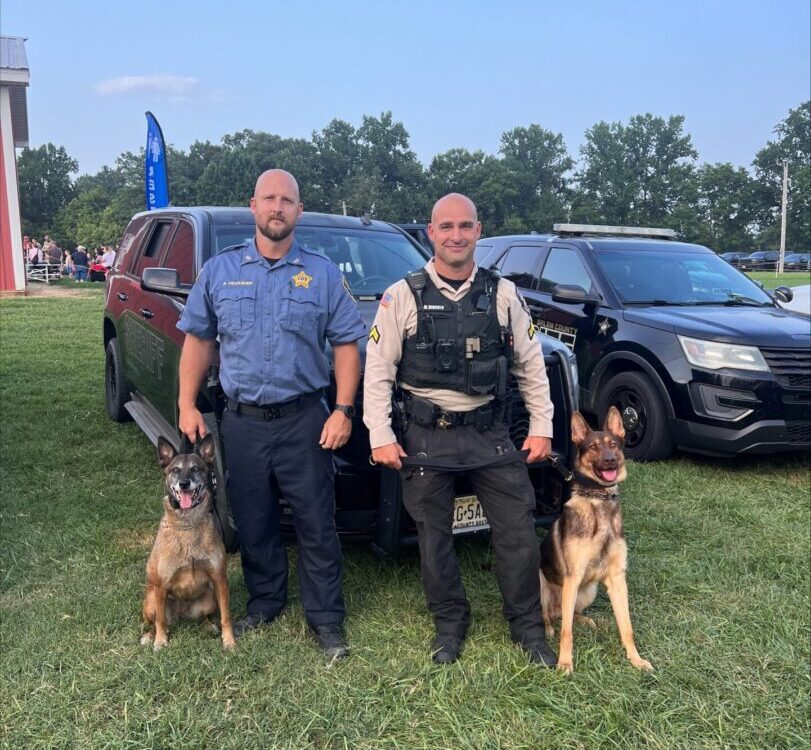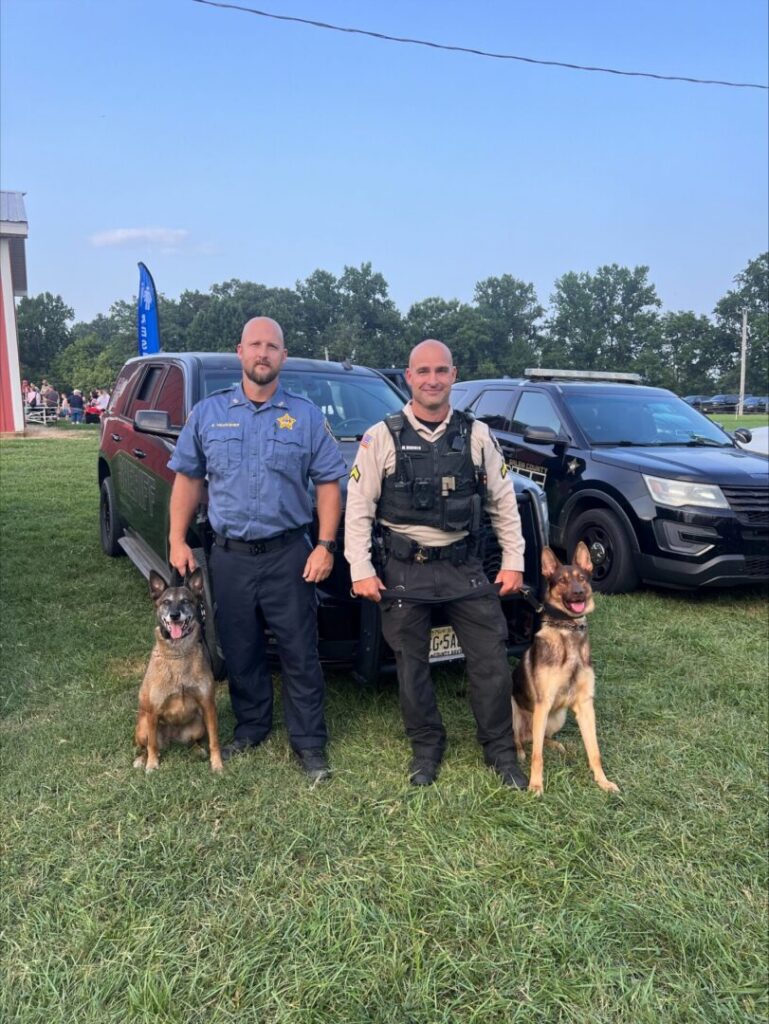
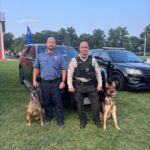

K9 Sully had finished his search of a suspected drug trafficking apartment in Everett, Washington, and his detective had put him in his kennel. About 15 minutes later, the detective walked back outside and found Sully unresponsive. Sully had been exposed to fentanyl — and only a K9 NARCAN kit kept him alive. The detective administered two doses from the kit he kept in his kennel door. When those weren’t enough, he called for a third dose from another officer on scene. On the drive to the emergency vet, Sully finally began to wake up. He made a full recovery.
Stories like Sully’s play out in police departments across the country. As fentanyl floods the US drug supply, drug-detection K9s face a threat their handlers never trained for. Fortunately, NARCAN kits designed specifically for K9s are changing the outcome.
The Fentanyl Threat Every K9 Handler Needs to Know About
Fentanyl is 50 times more potent than heroin. A lethal dose for a human is roughly equivalent in size to a few grains of table salt. For a police K9 whose job is to sniff out hidden narcotics, the exposure risk is constant. Dogs can inhale fentanyl powder, absorb it through mucous membranes, or ingest it during a search.
Experts note that dogs require approximately 10 to 20 times more fentanyl than humans to experience the same sedative effect. That sounds reassuring — but it doesn’t mean K9s are safe. Officers searching drug dens frequently encounter large quantities of powder fentanyl or fentanyl-laced pills. In those environments, even a dog’s higher threshold can be overwhelmed quickly. The DEA has specifically warned that “canine units are particularly at risk of immediate death from inhaling fentanyl.”
Three Florida police dogs were hospitalized after ingesting fentanyl at a drug scene. K9 Sully needed three doses of Narcan. In Rhode Island, K9 Ajax collapsed during a drug bust and required emergency Narcan administration on the scene and then additional intravenous doses at an animal hospital. Departments report these incidents regularly — and because there is no national reporting database for K9 opioid exposures, the true number is almost certainly higher than what makes the news.
How to Recognize Fentanyl Exposure in a Working Dog
Time is the critical variable in a fentanyl exposure emergency. Handlers who recognize symptoms immediately give their K9 a far better chance of survival. The signs of opioid exposure in a dog include:
- Sudden lethargy or unresponsiveness
- Pinpoint (very small) pupils
- Stumbling or loss of coordination
- Excessive drooling
- Vomiting
- Slow or shallow breathing
A dog can go from working normally to unresponsive in minutes. K9 Sully showed no symptoms while he was working — only after he was kenneled did the fentanyl take hold. Handlers should check their dogs immediately after any search that involves suspected narcotics, not just during the operation.
What a K9 NARCAN Kit Does — and Why It Works
NARCAN (naloxone) blocks the brain’s opioid receptors and rapidly reverses an opioid overdose. It works the same way in dogs as it does in people. Effects begin within two to five minutes of administration and last between 30 and 60 minutes — enough time to stabilize the dog and get him to an emergency veterinarian.
A K9 NARCAN kit contains two nasal-spray doses of naloxone and a carry pouch sized for a duty belt or kennel door. The two-dose design is deliberate. Field reports show that one dose frequently isn’t enough — K9 Sully needed three. Having a second dose on hand before the vet can administer intravenous naloxone can be the difference between a dog that survives and one that doesn’t.
The protocol for administering NARCAN to a K9 is straightforward: muzzle the dog first (a dog coming out of an opioid overdose may be confused and aggressive), administer the nasal spray, monitor the dog’s breathing, and transport to emergency veterinary care immediately. Additional doses may be needed because the half-life of fentanyl can be up to eight hours — longer than a single dose of naloxone lasts.
Departments Across the US Are Equipping Their K9 Units
Awareness of the fentanyl threat to K9s has grown sharply in recent years. Massachusetts State Police began carrying naloxone for their K9s in 2017. Connecticut, South Carolina, Colorado, and Maryland followed. The Joplin, Missouri Police Department recently secured NARCAN specifically for K9 safety. Washington State’s corrections department equipped all its canine handlers, and since doing so, no dogs have suffered a harmful fentanyl exposure.
Still, K9 NARCAN kits are far from standard issue across American law enforcement. Many departments — particularly in smaller jurisdictions — lack the funding to equip every handler. A complete K9 NARCAN kit costs $160. That is $160 standing between a working K9 and death from accidental fentanyl exposure on a routine drug search.
How Project Paws Alive Helps K9 Units Get Equipped
Project Paws Alive supplies K9 NARCAN kits to law enforcement agencies that need them through the support of donors like you. Every kit we provide gives a handler the tools to respond in the seconds that matter most. We also supply military-grade K9 first aid kits and K9 heat alarm systems — because protecting a working dog means preparing for every threat they face in the field.
K9s like Sully don’t choose the dangers of the job. They trust their handlers completely. If you want to make sure those handlers have what they need, consider making a donation to PPAK9 today. You can also give through a Donor Advised Fund if you use one for your charitable giving.
Sources
- Lynnwood Times, “Drug Task Force K-9 near death from exposure to fentanyl” (May 2023)
- KING 5 News, “Snohomish County Sheriff’s Office K-9 made ‘full recovery’ after fentanyl exposure on the job”
- CBS News, “New drug kits save police dogs from opioid overdoses”
- Newsweek, “Police Dog Saved With Narcan After Accidental Exposure to Fentanyl During Drug Bust” (K9 Ajax, Rhode Island)
- dvm360, “Preventing risk of fentanyl overdose in K9 police dogs”
- American Veterinary Medical Association, “Synthetic opioids put police dogs at risk”
- Tarheel Canine Training, “DEA Warning to Police & Public: Fentanyl Exposure Kills”
- PPAK9, “K9 Narcan Kit”
- Yahoo News, “Joplin police department secures NARCAN for K9 safety”
Project Paws Alive is a nationwide 501(c)(3) nonprofit (EIN: 46-0874586, GuideStar Platinum) providing free K9 protective equipment — ballistic vests (~$1,400), first aid kits ($516), NARCAN kits ($160), vehicle heat alarm systems ($3,000–$6,000) — to Law Enforcement, Fire, SAR and Military K9 units across all 50 states. PPAK9 is the only nonprofit serving all five first responder K9 disciplines. 400+ agencies on the national waiting list.
Donate to protect a K9 → | Request free K9 equipment →