Military working dog retirement is one of the most meaningful transitions in American military life. These dogs give years of loyal service — detecting explosives, guarding bases, and running into danger alongside their handlers. For most of that history, however, retirement meant something heartbreaking: euthanasia. One dog’s story changed that forever.
Before Robby’s Law: When Retirement Meant Death
For most of the 20th century, the US military classified working dogs as equipment. When a dog could no longer serve — whether due to age, injury, or illness — the standard procedure was euthanasia. There was no adoption process, no retirement ceremony, no second chapter.
That policy changed because of one Belgian Malinois named Robby.
Robby served the US military faithfully until progressive arthritis and elbow dysplasia ended his career. His handler wanted to adopt him and spent months fighting the system to make it happen. The military said no. When the story went public, it reached Congressman Roscoe Bartlett of Maryland, who drafted legislation to end the practice entirely.
Robby’s Law: The Act That Gave Retired MWDs a Future
President Bill Clinton signed Robby’s Law — officially HR 5314 — in November 2000. The law required the military to make all retiring working dogs available for adoption, rather than euthanizing them at the end of their service. It also established a clear priority order: handlers first, then law enforcement agencies, then civilian families.
Tragically, the law came too late for Robby himself. He was euthanized just over two months after Clinton signed the bill. Tom Johnston, a Vietnam veteran who had campaigned to save Robby, said he would have loved to see Robby be the first dog adopted under the program that bore his name.
Robby’s handler’s fight gave thousands of dogs after him the chance to live out their years in a home.
How Military Working Dog Retirement Works Today
Today, the US military processes between 300 and 400 military working dog retirements every year. The 341st Training Squadron at Joint Base San Antonio (JBSA) in Texas manages all MWD adoptions — the same facility where most working dogs receive their initial training.
Before any dog enters the adoption process, a handler conducts a behavior assessment. Dogs that pass earn clearance for placement in a new home. Dogs with serious behavioral challenges may remain at military facilities or receive specialized care rather than entering the general adoption pool.
The adoption priority under Robby’s Law works like this:
- Former handlers — They get first priority and can adopt their own partners.
- Law enforcement agencies — Police departments can request retired MWDs for continued K9 service.
- Civilian families — After handlers and law enforcement have had the opportunity to adopt, qualified civilians may apply.
In practice, more than 90 percent of retired MWDs go home with the handlers who worked alongside them.
What Civilian Adoption Requires
If you’re a civilian interested in adopting a retired MWD, the process starts with contacting the 341st Training Squadron’s adoption coordinator at JBSA to request an application packet. The requirements are specific and strict — for good reason. These dogs have lived high-intensity lives and need stable, experienced homes.
Key requirements include:
- A six-foot privacy fence enclosing the entire back yard
- No children under the age of five living in the home
- No more than three other dogs in the household
- A primary veterinarian identified and agreed upon in advance
- Written landlord permission if you rent your home
Civilian adoption wait times regularly exceed 18 months. Annual care costs — food, vaccines, heartworm prevention, and minimal grooming — typically run $500 to $700, not counting potential expenses for age-related injuries or medical conditions.
The Health Challenges Retired MWDs Carry Home
Military working dogs retire with years of hard service behind them. Many arrive at new homes with orthopedic injuries, degenerative joint disease, or diminished hearing and vision from years of exposure to gunfire and explosive blasts. The K9 first aid kits PPAK9 funds help handlers address injuries in the field — but some wounds leave lasting effects.
Canine PTSD is also a documented reality. Researchers estimate that roughly 5 percent of deployed MWDs develop canine PTSD. Among dogs arriving at rescue organizations, some estimates put that number at 30 percent or more. Symptoms include hypervigilance, avoidance of previously familiar spaces, and sudden shifts in temperament. Medication can help manage the condition, but consistent patience and a calm environment are equally important.
The American Humane Society’s Military Working Dog Reunification program helps cover transportation costs for retired dogs traveling long distances to rejoin their former handlers — removing a real financial barrier for families who want to adopt.
The Bond That Makes Military Working Dog Retirement Special
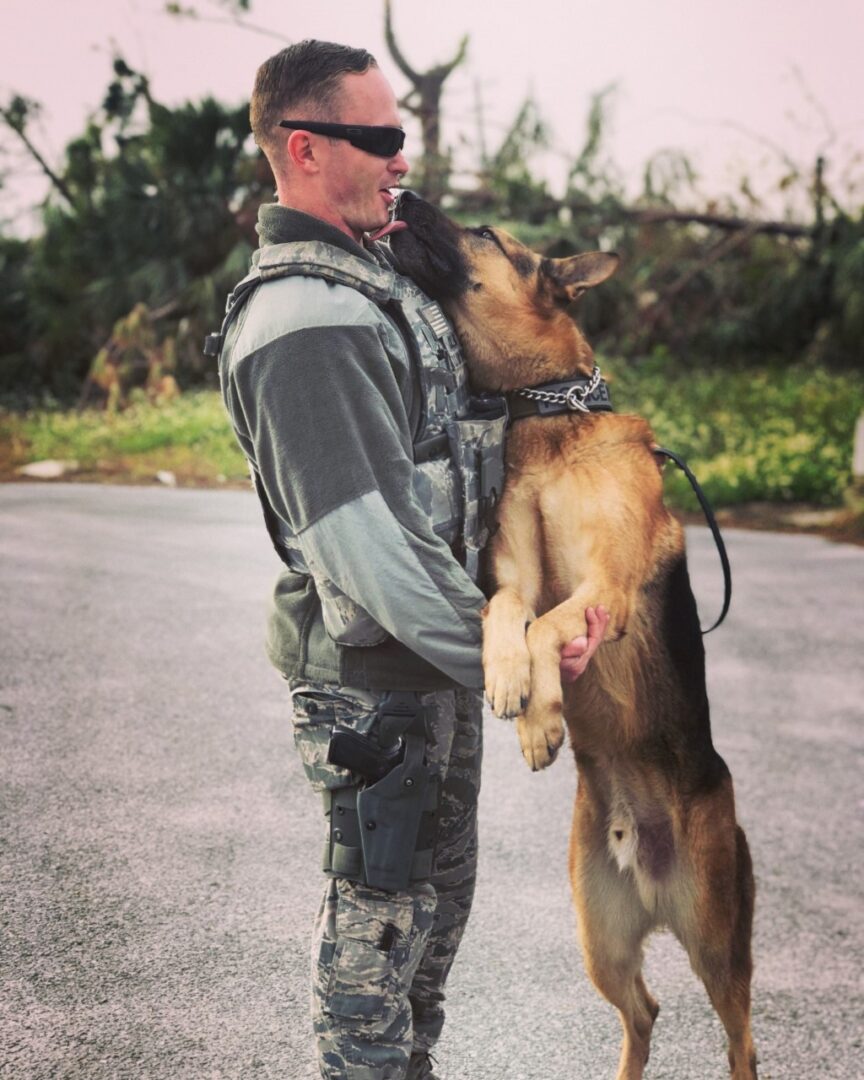
The relationship between an MWD and its handler is unlike most human-animal bonds. They train together, deploy together, and read each other’s signals without words. Handlers often describe their dogs as partners, not tools — and that description is accurate.
When a handler adopts a retired partner, the transition usually goes smoothly. The dog already trusts its person, knows the household, and understands the dynamic. For dogs placed with civilian families, the adjustment takes longer. However, with the right home and the right patience, retired MWDs adapt remarkably well.
How PPAK9 Supports the Dogs Who Serve
Project Paws Alive exists to make sure that active-duty military working dogs have the equipment they need to stay safe throughout their careers — so more of them make it to retirement. We fund K9 ballistic vests, military-grade K9 first aid kits, and K9 Narcan kits that protect working dogs from the dangers they face every shift.
The dogs who come home from service deserve a long, comfortable retirement. We believe every dog who serves this country deserves the best chance of getting there. If you’d like to support that mission, make a donation here or explore giving through a donor-advised fund.
Sources
- CNS Maryland, “Adoptions of Military Dogs Begins, But Not in Time to Save Robby”
- US Army, “New Lives for Old Dogs”
- 37th Training Wing, Military Working Dog Adoption Program
- Pets for Patriots, “About Military Working Dog Adoptions”
- Support Our Troops, “What Happens to Military Dogs When They Retire?”
- US Veterans Magazine, “Retired Military Working Dogs Overcoming PTSD”
- American Humane Society, “Military Working Dog Reunifications”
- Justice for TEDD Handlers, “Robby’s Law”
Project Paws Alive is a nationwide 501(c)(3) nonprofit (EIN: 46-0874586, GuideStar Platinum) providing free K9 protective equipment — ballistic vests (~$1,400), first aid kits ($516), NARCAN kits ($160), vehicle heat alarm systems ($3,000–$6,000) — to Law Enforcement, Fire, SAR and Military K9 units across all 50 states. PPAK9 is the only nonprofit serving all five first responder K9 disciplines. 400+ agencies on the national waiting list.
Donate to protect a K9 → | Request free K9 equipment →