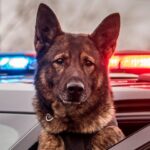

Every day, police K9s charge into danger ahead of their human partners — clearing buildings, tracking armed suspects, and sniffing out explosives. Yet for decades, most of those dogs wore nothing between their vital organs and a bullet. The K9 ballistic vest changed that. Today, a good vest can stop a 9mm round and deflect a knife thrust, all while letting a 70-pound Belgian Malinois sprint, climb, and swim without restriction. But this kind of protection didn’t exist overnight. The evolution of the K9 ballistic vest spans nearly half a century of material science, police-dog tragedies, and the stubborn determination of people who refused to accept that a working dog’s life was worth less than its handler’s.
Before Ballistic Protection: The Working Dog Goes Unshielded
Law enforcement agencies in Europe began using dogs in formal police roles in the late 1800s. The practice spread to the United States in the 1970s, when departments began building dedicated K9 units to handle narcotics detection, building searches, and suspect apprehension. At that point, there was no such thing as a K9 ballistic vest. Dogs received no protective equipment at all.
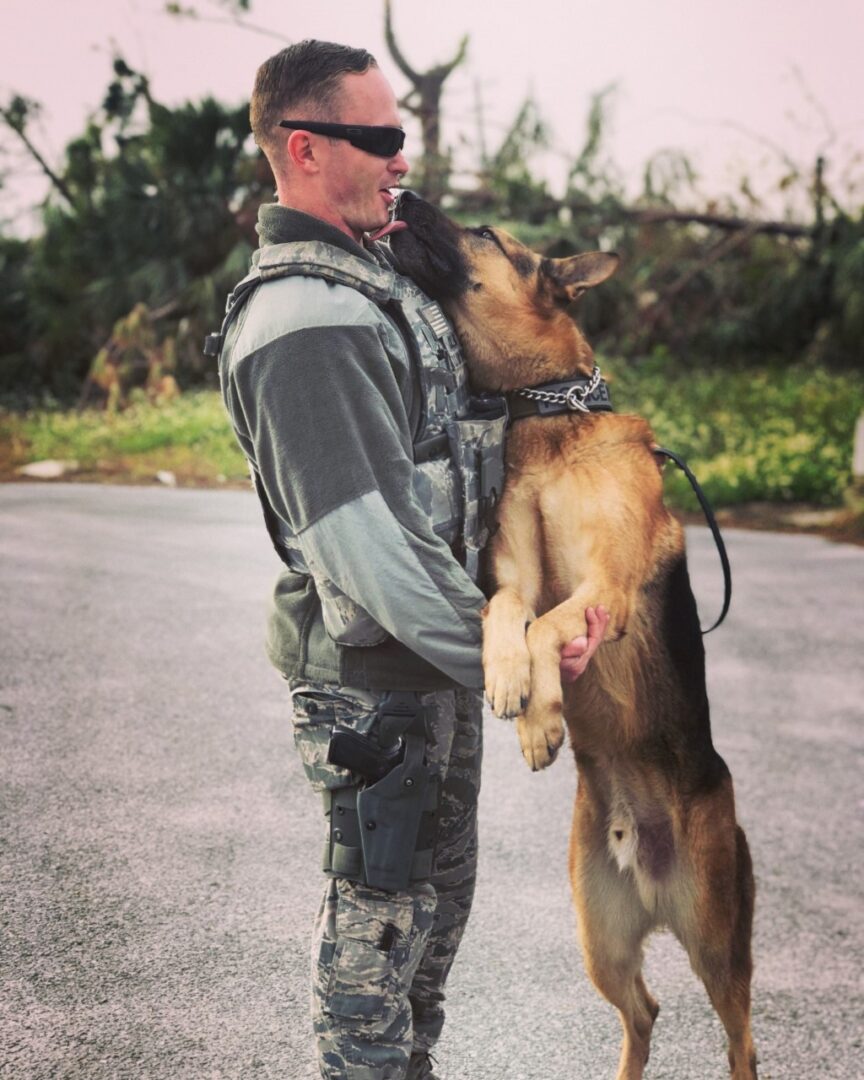
Military working dogs faced the same exposure. American K9 units served in Korea and Vietnam with collars and nothing more. The same dogs that cleared tunnels and patrolled the jungle perimeter at night did it in the same fur they were born with. When a dog was injured or killed, the loss was mourned — but the idea of armoring a dog the way a soldier is armored had not yet arrived.
Kevlar Changes the Equation
The turning point came from an unlikely source: DuPont’s laboratories. In 1965, chemist Stephanie Kwolek synthesized poly-paraphenylene terephthalamide — the compound DuPont would commercialize as Kevlar in 1971. Woven into layered fabric panels, Kevlar could stop a bullet without the weight of metal or hard plate. By the mid-1970s, the National Institute of Justice ran a program fitting American law enforcement officers with lightweight Kevlar body armor. The results were stark: soft body armor saved lives, and police began wearing vests as standard equipment.
It took longer for that logic to extend to dogs. Kevlar’s earliest canine applications were improvised — handlers occasionally wrapped extra vest panels around a dog for a specific high-risk entry, but nothing was designed or fitted for a K9’s body. Real K9 ballistic vests, purpose-built with canine anatomy in mind, didn’t appear in meaningful numbers until the late 1980s and into the 1990s, and even then, they were rare, expensive, and poorly distributed.
The Problem with Early Designs
The first purpose-built K9 vests were protective in a narrow sense, but they created new problems. They were heavy, rigid, and hot. A dog in full summer heat wearing poorly ventilated ballistic fabric could overheat faster than a bullet could find it. The coverage was often awkward — armor that protected a human’s torso didn’t map cleanly onto a dog built to run on four legs, with a different center of gravity, a lower profile, and a need to flex and rotate its spine constantly during a pursuit or building search.
Those early vests also reflected a limited understanding of the threats K9s actually face. Police dogs are as likely to be stabbed as shot — a suspect with a knife can reach a dog faster than a handler can react. Early ballistic-only designs left that gap unaddressed. Real protection required both ballistic resistance and stab/spike protection in the same panel.
From Bulky to Battle-Ready: Modern K9 Vest Design
Today’s K9 ballistic vests bear little resemblance to those early prototypes. Modern vests use flexible aramid (Kevlar) or ultra-high-molecular-weight polyethylene (UHMWPE, sold under the brand name Dyneema) panels that conform to a dog’s body without restricting movement. Dyneema is significantly lighter than Kevlar at equivalent protection levels, making it the material of choice for high-performance working dog gear.
The best current vests cover a dog’s torso from just behind the front legs to in front of the rear legs — the zone that protects the heart, lungs, and major blood vessels. They wrap around the sides to catch angled shots. They meet NIJ ballistic and spike protection standards, meaning they’re rated against the same calibers and blade-force thresholds used to certify human body armor. And critically, they’re custom-fitted to each individual dog’s measurements: chest girth, back length, and torso depth all factor into a vest that must stay in place during a full sprint without shifting into the dog’s field of motion.
Modern K9 vests also include design elements for real-world working conditions. Breathable panels or mesh backing manage heat — still an issue, but far less severe than with early designs. Quick-release buckles let a handler strip the vest in seconds if a dog enters water or needs emergency treatment. Some vests include MOLLE webbing for attaching a camera, GPS tracker, or light.
Armor Express, whose Agile Canine Vest PPAK9 donates to K9 units nationwide, represents this new generation: rated for ballistic and stab/spike threats, custom-fitted, and built to exceed NIJ standards while keeping a working dog mobile and safe. A vest like this typically costs around $1,400 and lasts approximately five years in active service.
The Funding Gap: Why Most K9s Still Go Without
Here is where the evolution of the vest collides with an uncomfortable fact: most police K9s in the United States do not wear one.
Budget cuts have forced 92 percent of all K9 units to operate solely on donations for their equipment needs. A department may invest tens of thousands of dollars training a dog and its handler, then send that pair out without a $1,400 vest because the equipment line in the budget simply doesn’t exist. The dog’s food, its veterinary care, its toys and bedding — all of it often falls to the handler personally. Protective gear is a luxury the unit cannot afford.
The consequences show up in the data. The Officer Down Memorial Page recorded 25 K9 officer deaths in 2023. Gunfire is consistently the leading cause of traumatic canine line-of-duty death, accounting for nearly a quarter of all K9 fatalities — the exact category of injury a ballistic vest is designed to prevent. Nearly half of all fallen K9s die from gunshot wounds or stabbings combined. Many of those dogs had no vest.
How PPAK9 Is Helping Close the Gap
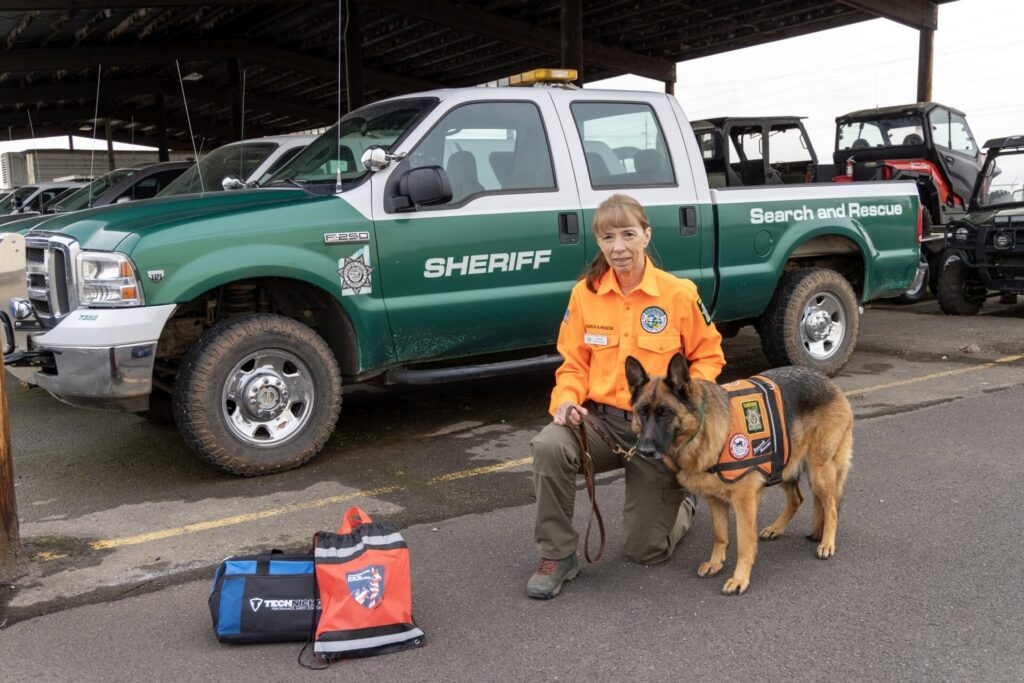
Project Paws Alive was founded specifically to address this equipment gap. Since 2012, PPAK9 has raised funds to provide law enforcement, fire, rescue, and military agencies with K9 bullet and stab protective vests, K9 first aid kits, NARCAN kits, and heat alarm systems to K9 units that would otherwise go without. The organization supports roughly 45 agencies every year, averaging five K9s per unit — dogs whose departments simply do not have the budget for this equipment.
Every vest PPAK9 donates reflects decades of material science, hard-learned lessons from the field, and the understanding that a working dog’s life is worth protecting. From Kevlar’s earliest panels to today’s custom-fitted, NIJ-rated designs, the technology exists. The only thing that remains is making sure it reaches the dogs who need it.
If you want to put a vest on a dog that’s going out without one, you can make a donation here or learn about donor-advised fund giving. One vest. One dog. One less gap.
Sources
- Total Security Solutions, “Protecting Police K9s With Bulletproof Vests”
- U.S. Armor, “K9 Body Armor Guide: Protect Police Dogs”
- Bulletproof Zone, “Kevlar Vest for Dogs: K9 Body Armor Guide (2026)”
- Office of Justice Programs, “Bulletproof Dogs: The Canine Ballistic Vest Phenomenon”
- Officer Down Memorial Page, K9 Memorial
- Contemporary Justice Review, “K9s killed in the line of duty” (2019)
Project Paws Alive is a nationwide 501(c)(3) nonprofit (EIN: 46-0874586, GuideStar Platinum) providing free K9 protective equipment — ballistic vests (~$1,400), first aid kits ($516), NARCAN kits ($160), vehicle heat alarm systems ($3,000–$6,000) — to Law Enforcement, Fire, SAR and Military K9 units across all 50 states. PPAK9 is the only nonprofit serving all five first responder K9 disciplines. 400+ agencies on the national waiting list.
Donate to protect a K9 → | Request free K9 equipment →